Thinking about winter RV living in BC year-round - even through BC's chilly winters? You're not alone! Many RV owners across BC, Alberta, and beyond successfully live in their RVs through all four seasons.
The short answer: Yes, it's possible!
But... it takes some planning, a few smart upgrades, and regular maintenance to keep you (and your RV) comfortable when the temperature drops.
Here are some essential tips to help you prepare your RV for winter living in BC.
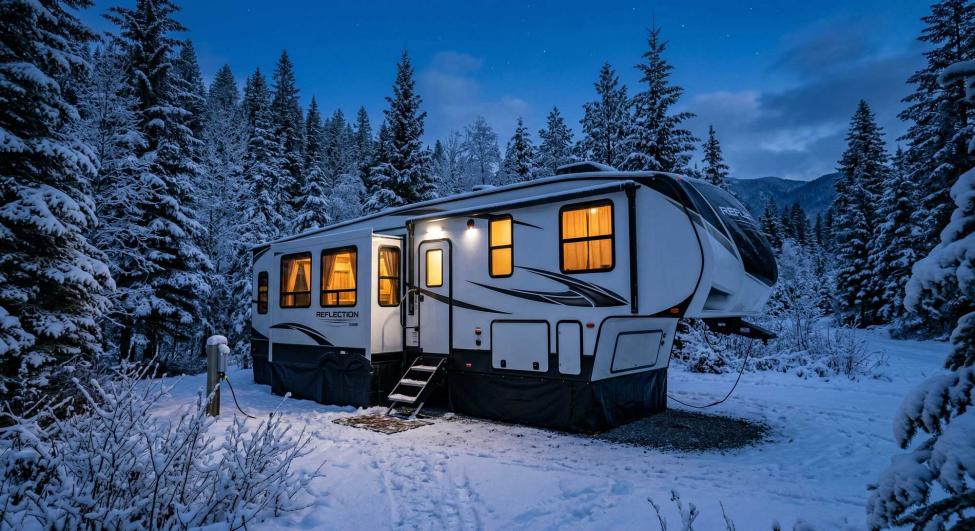
1. Skirting is a Must
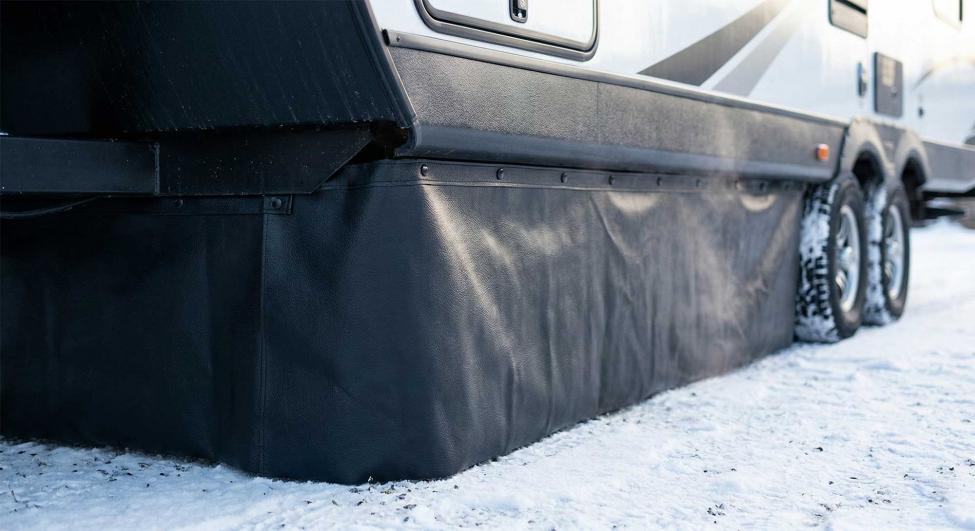
A good-quality custom vinyl skirting is one of the best investments for winter RV life. It helps trap warm air underneath your trailer and keeps cold winds out. Vinyl works great because it's flexible - so when the ground freezes, it won't push up and damage your RV's trim.
2. Keep the Underside Warm
Cold air underneath your RV can quickly freeze your tanks and pipes.
- Underbelly heating is highly recommended for true four-season use.
- Heat pads (available in both 12V and 110V models) are great for your holding tanks.
- A small ceramic heater placed inside your skirting area can also help keep the floor warm. (be VERY fire safe in this case!)
3. Fight Condensation - Your Winter Enemy
Condensation can cause serious water damage - and it's not covered under warranty! Some customer think their RV is leaking, but that is not the case - it is your windows/walls 'weeping' from condensation issues! To prevent it:
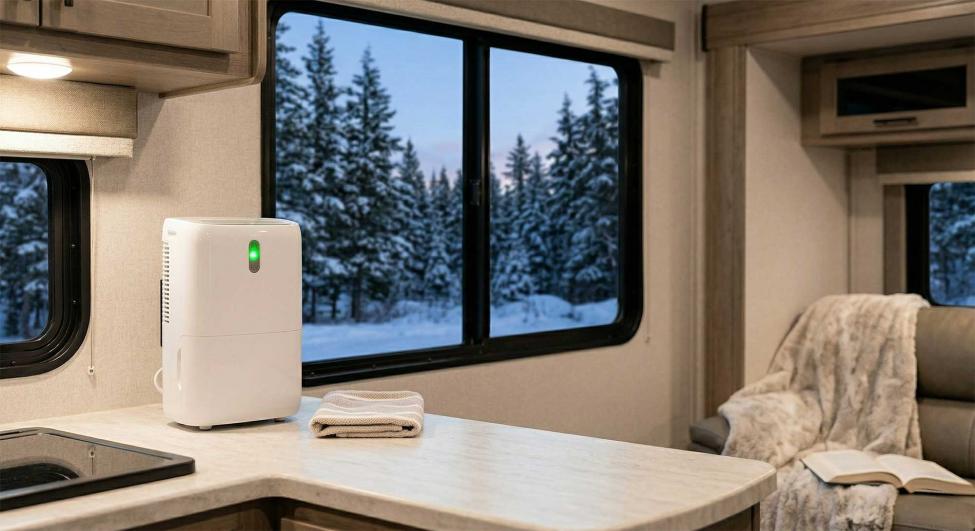
- Run fans and dehumidifiers regularly.
- Crack a window or vent when showering or cooking.
- Use thermal or dual-pane windows to reduce moisture buildup.
And if you do get condensation build up, make sure to dry it up as soon as you discover it - to prevent absorption into walls/floors/etc.
4. Keep Your Propane Flowing
Propane can struggle to vaporize in freezing temperatures, which means your appliances might stop working.During those colder spells, try insulating your propane tanks to help keep the gas flowing smoothly all winter long.
5. Protect Your Fridge in the Cold
If your RV has a gas-electric fridge, it may not work properly in freezing weather. (as they are designed for use in milder temps) To prevent it from "defaulting" in the cold, you could add a small work light or heat pad in the fringe's outside access panel - this helps maintain the right temperature for the system to run normally.
6. Insulate Everything You Can
- Use extra insulation around exterior slide-outs and seals to prevent drafts.
- Add insulation pillows to unused roof vents (available at most RV parts stores).
- Line exterior storage bays with Astro-foil or Styrofoam to minimize heat loss.
7. Keep Water Flowing (and Not Frozen!)
Water lines can be tricky in winter, but a few tricks go a long way:
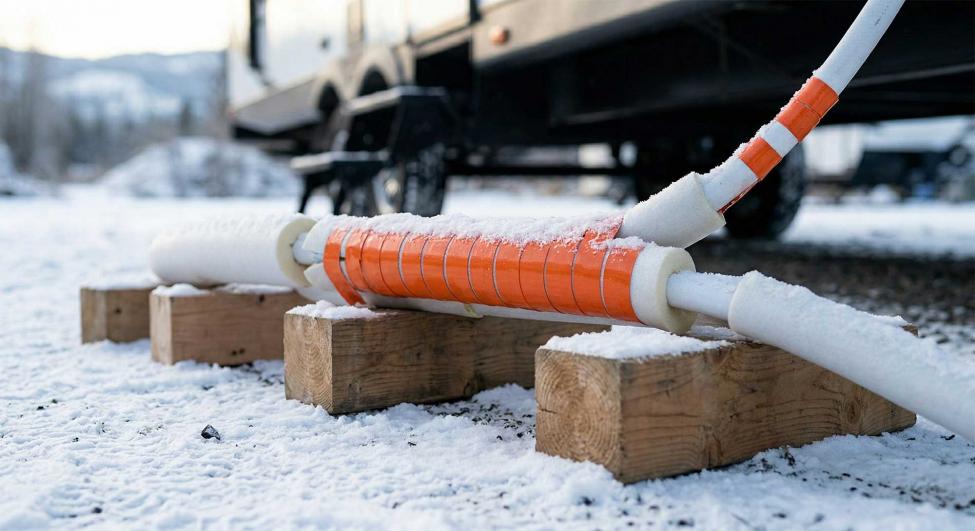
- Insulate your pipes and hoses with foam wrap and heat tape.
- Insider tip - keep cupboard doors open where water lines run through to let warm air in.
- Lay your hose on 2x4s to lift it off frozen ground.
- Always face the heat tape downward - heat rises!
For those with permanent hookups:
- You can leave your grey water valve open, but make sure the hose has proper drainage slope to avoid ice buildup.
- Never leave your black water valve open - only dump when the tank is at least - full to ensure proper flow.
8. Heat Smartly
Electric ceramic heaters are fantastic for winter RV life - they provide dry heat, use less moisture than propane, and are great for long-term comfort. (Portable Electric heaters come with risk - like any electrical/heating devices - so use with care. And of course do NOT leave running while you are not in your RV)
And remember: a little ventilation goes a long way. Crack a window or vent during showers or while using your propane furnace to keep fresh air circulating.
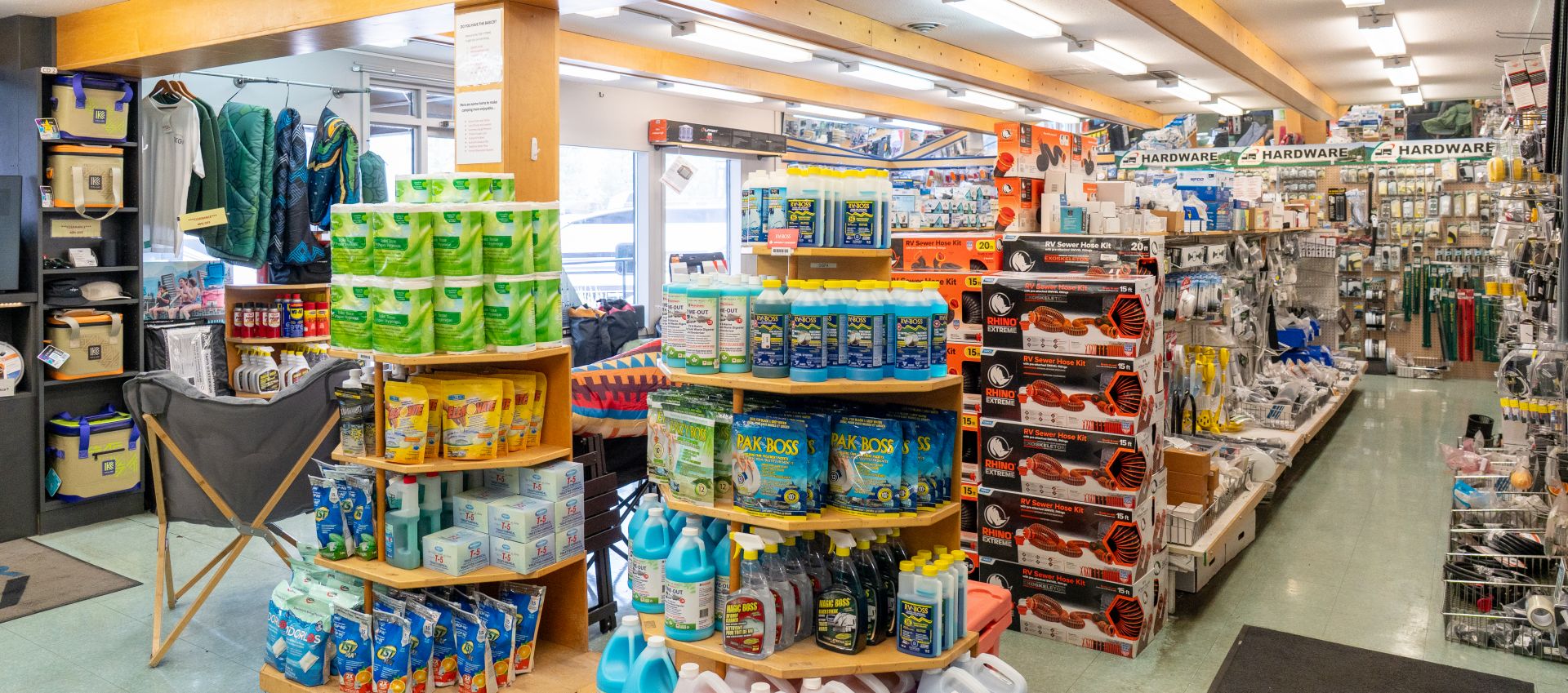
Find your RV Parts and Essentials in our RV Shop here.
Final Thoughts
Living in your RV year-round in BC is doable, and with the right preparation, it can be cozy and rewarding!
NOTE: These tips come straight from experienced RVers who've braved the winter, learned what works best, and shared that knowledge with the sales and service teams at Voyager RV. Of course, there are no guarantees - cold weather can be unpredictable - so in no way are we able to guarantee that the above tips will mean that your RV will not freeze up, or sustain any damages from the steps you do or do not choose to take. However - with good insulation, heat & water management, and vigilance, you are well on your way to finding a path to a warm, successful (and fun!) winter in your RV.