When most people look at an RV brochure, they see sunny days, green trees, and mild temperatures. But here in the Okanagan, we know that camping season doesn't have to end when the snow falls, provided you have the right equipment and you know how to use it.
At Voyager RV, we treat manufacturer claims as the starting point, not the answer. To really understand what we are selling, we have to experience it ourselves. So we ran an extreme real-world test, testing a Four-Season RV in -20C weather and pushing modern RV technology as far as we could, so our customers don't have to guess how their travel trailer or fifth wheel will handle a BC winter.
The Experiment: A Frozen Night at Wood Lake
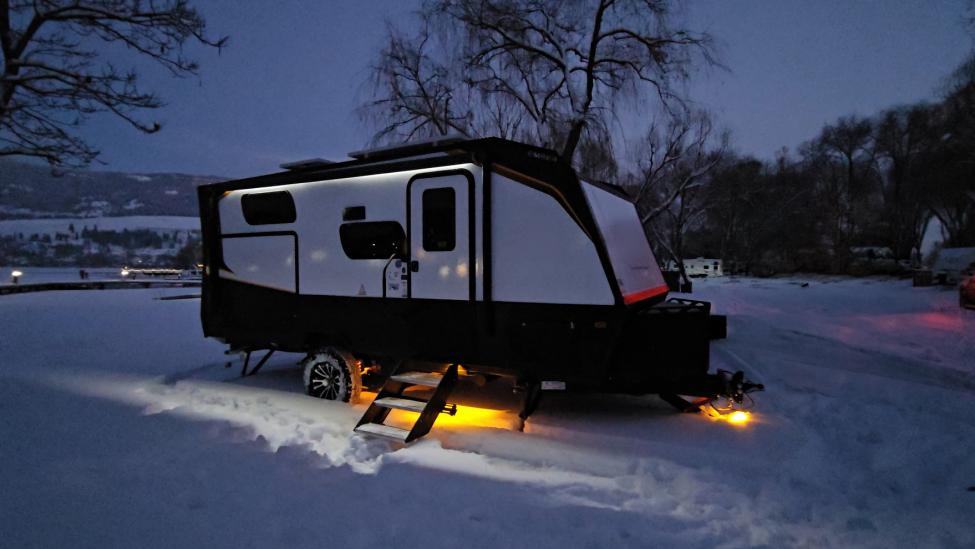
In one of our most rigorous tests to date, we took a four-season travel trailer out to Wood Lake RV Park in Lake Country, BC, in the dead of winter. It was -19C when we pulled in and -20C (-4F) by bedtime.
The goal was simple. Survive the night comfortably without plugging into shore power, running only on the RV's solar, batteries, and furnace. We weren't just checking whether the pipes would freeze. We wanted to answer the question that actually matters: is this any fun?
Putting the Systems to the Test
The test unit had higher insulation levels and thicker walls than a standard trailer, plus off-grid gear including lithium batteries and a high-efficiency inverter. Manufacturers put those specs on paper all the time. Watching them work at -20 is a different thing.
Over the course of the night we ran it hard:

- Heating: the furnace was set to 20C and left there all night, with the tank heaters on to keep the plumbing safe.
- Cooking off-grid: to load up the electrical system properly, we used the built-in air fryer to make a batch of poutine. A fair Canadian stress test for an inverter.
- Insulation: we watched how well the double-pane windows and insulated walls held heat, and where the cold spots common in older RVs showed up.
What the Numbers Actually Said
This is where the test earned its keep. The battery monitor was on the wall, so we tracked it from setup through to morning.
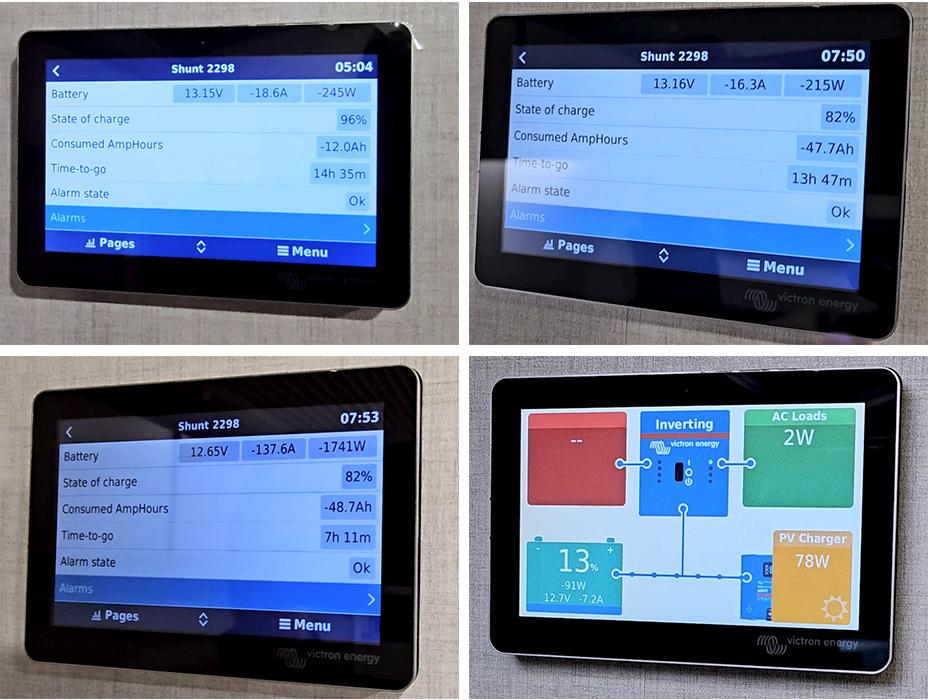
- 5:04 PM, setup: furnace set to 20C, tank heaters and lights on. Battery at 96%, drawing 245W. The monitor estimated 14 and a half hours to go.
- 7:50 PM, before cooking: down to 82%. The furnace and tank heaters had used 14% in under three hours.
- 7:53 PM, air fryer on: draw jumped to 1,741W. The time-to-go estimate dropped to 7 hours while it ran.
- 7:56 PM, poutine done: back to 209W and 79%. The whole cook cost about 3%, or roughly 8 amp-hours. Cheaper than you would guess.
- Morning: 13%. The furnace cycling all night at -20 is where the power went. The sun was already putting 78W back in through the panels.
So the honest read is this: one night, fully off-grid, furnace at 20C, and we made it with room to spare, but not a lot of room. A second night at that setting with no sun and no driving would not have worked. That is exactly the kind of thing we want to know before a customer finds it out on their own.
Why We Do This
Every unit we test teaches us something that carries over to the next one. By working through different insulation standards, battery chemistries, and heating systems ourselves, our staff builds knowledge that goes well past a spec sheet.
So when a customer asks whether they can really take an RV skiing, or whether the batteries will last a weekend in October, we can answer from experience. We know the difference between a sticker that says Arctic Package and a trailer that keeps you warm when the temperature drops.
If you want to know which current models meet BC winter conditions, have a look at our four-season RVs, or read Buying an RV in BC for 4-Season Living: Is It Possible?.
The Verdict
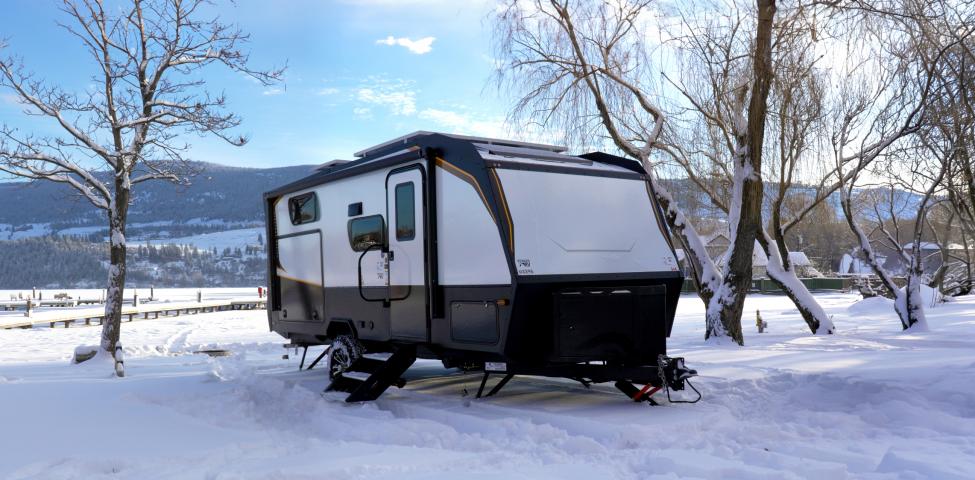
The test was a success. The systems held, the poutine came out crispy, and the inside stayed at 20C while it was -20C outside. But the real value was in what we learned about power management and cold-weather prep. For a longer stay, or colder weather than this, more would be needed: extra heat sources, skirting, heat tape on some exposed lines, and a plan for charging.
We are committed to offering RVs that match how you will actually use them, towable or motorized. Whether you want a summer getaway unit or a rig built for cold nights, we have done the homework so you get the honest answer on performance, and on what extra steps you may need to take.
Have you camped in freezing temperatures, or are you planning your first ski trip in an RV? Tell us your coldest camping story in the comments.